
Who makes work–family balance possible?
A guide to reading flexible-work and “mompreneur” stories through time, income and care.
In this essay
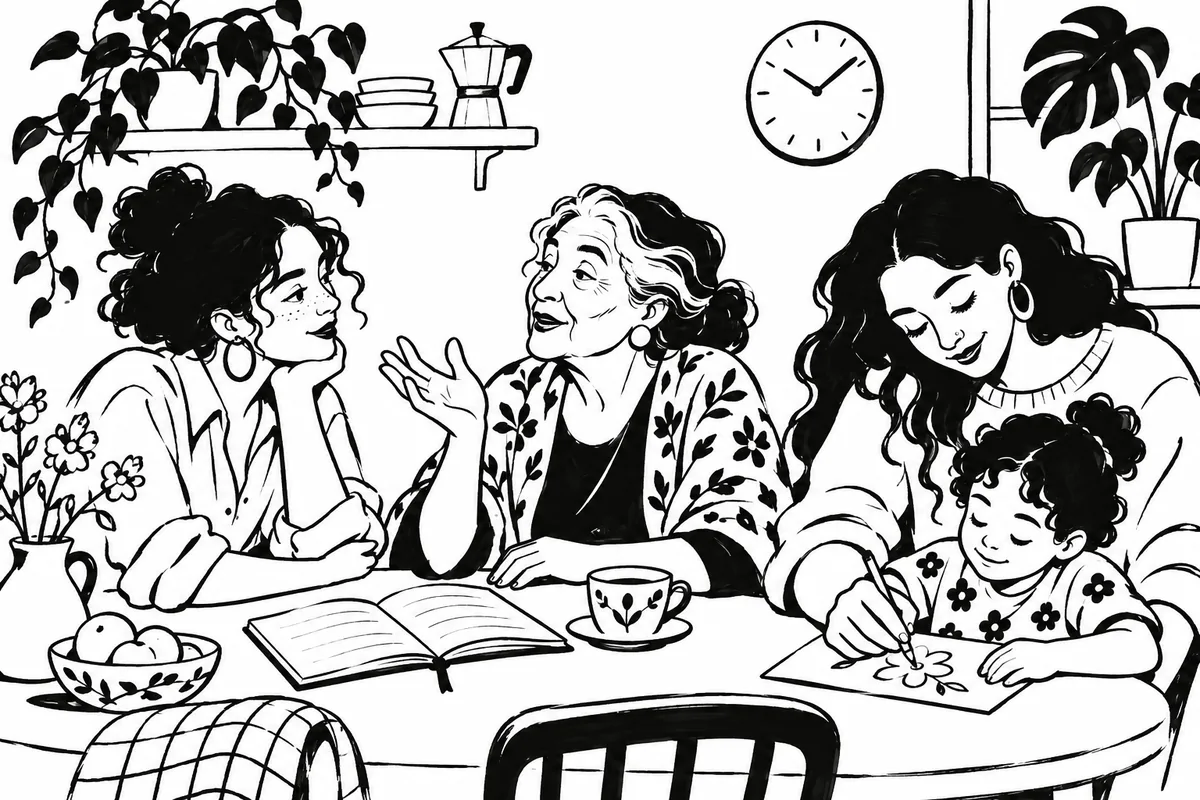
An illustration for this essay.
Look beyond the timetable
A story about balancing work and family often begins with scheduling. A timetable matters, but so do predictable earnings, access to leave, the availability of care and control over working hours. Ask which of these conditions the story assumes before borrowing its advice.
The ILO’s 2018 care report examines paid and unpaid care in relation to work and gender inequality. It gives this reading a different scale: care is not only a private task to fit between appointments, but also work organised through households, labour markets and public arrangements.
Read entrepreneurship with its conditions attached
An account of running a business around children can offer a useful personal strategy. It does not establish that self-employment is accessible or secure for every carer. Ask what start-up resources, support, customers and working time make the account possible. Separate a person’s description from a general recommendation.
The old archive used “mompreneures” in this page’s address. The address is retained for continuity; the guide uses the more common “mompreneur” when discussing that narrative. Neither term should reduce a worker to a family role or assume that care belongs only to mothers.
Care is larger than a motherhood story
Care also includes supporting an older relative, a partner, a neighbour or a person with a disability. A story that uses only a mother-and-child image can leave those relationships out. The practical question remains: whose needs must be met, who has time to respond, and what support exists?
Imagine a worker whose relative’s appointment changes at short notice. A diary technique may help her reorganise tasks; it cannot create control over a shift or replace a missing service. This is an illustrative situation, not research evidence. Its purpose is to locate the decision-making power behind a claim that everyone can find balance by managing time better.
Ask who absorbs the uncertainty
If a meeting moves, a shift is cancelled or a child is ill, who can adjust and who loses income? A flexibility claim becomes clearer when its costs and decision-making powers are named. An arrangement can be flexible for a customer while leaving a worker with little control.
Use these questions as a checklist for evidence, not as a verdict on a particular household. Finish by distinguishing a personal coping method from a workplace rule or a public service. The same person may need all three; an account of balance becomes narrower when it treats only one as available.
Sources and further reading
- ILO, Care work and care jobs for the future of decent work (2018)Institutional report on paid and unpaid care.